Plaintiff’s two products – BLENDERS PRIDE, IMPERIAL BLUE – and Defendant’s CASINOS PRIDE belong to same segment i.e., Indian Made Foreign Liquor (IMFL) and, therefore, cater to same customer base. They are also available from same outlets. But, “one does not blend in a casino, and blenders don‘t play dice.” Arrangement of letters and overall appearance of Defendant’s mark cannot be said to be ‘deceptively similar’ to Plaintiff’s mark. Be it noted, Plaintiff does not hold any separate trademark registration either regarding i) color: blue or ii) border: golden dome shaped.

An action for ‘passing off’ is independent of The Trade Marks Act, 1999. An action based on deceit, fraud is not a necessary element to maintain a successful prosecution for ‘passing off’ if it is clear, Defendant has imitated or adopted Plaintiff‘s trademark, in a manner as would confuse public into believing goods of Defendant to be those of Plaintiff [Wockhardt Ltd v. Torrent Pharmaceuticals Ltd., (2018) 18 SCC 346; S. Syed Mohideen v. P. Sulochana Bai, (2016) 2 SCC 683; Laxmikant V. Patel v. Chetanbhat Shah, (2002) 3 SCC 65].
It does appear, prima facie, Defendant is seeking to create an association, in mind of a customer, of its product with Plaintiff’s. Coincidences are just too many. Defendant has ingeniously combined features of BLENDERS PRIDE and IMPERIAL BLUE marks to create an overall label and packaging which, in the mind of a customer of average intelligence and imperfect recollection, is ‘perilously likely’ to invite an inference of association between Defendant‘s product and of Plaintiff’s.
Justice Kekewich in Munday v. Carey, (1905) RPC 273: Where you see dishonesty, then even though similarity were less than it is here, you ought, I think, to pay great attention to items of similarity, and less to items of dissimilarity.
Lindley, LJ in Slazenger & Sons v. Feltham & Co., (1889) 6 RPC 531: If you are driven to conclude, what is intended to be done is to deceive, if possible – why should we be astute to say, he cannot succeed in doing that which he is straining every nerve to do?
A case of ‘passing off’ does exist.
– Hon’ble Justice C. Hari Shankar of Hon’ble High Court of Delhi, Pernod Ricard India Private Limited v. Frost Falcon Distilleries Limited, [IA 2821/2021 in CS (COMM) 94/2021].
_____
It has been aptly described by Justice Felix Frankfurter of United States Supreme Court in Mishawaka Rubber and Woolen Manufacturing Co. v. S.S. Kresge Co., 316 US 203 (1942). “If it is true, we live by symbols, it is no less true, we purchase goods by them.”
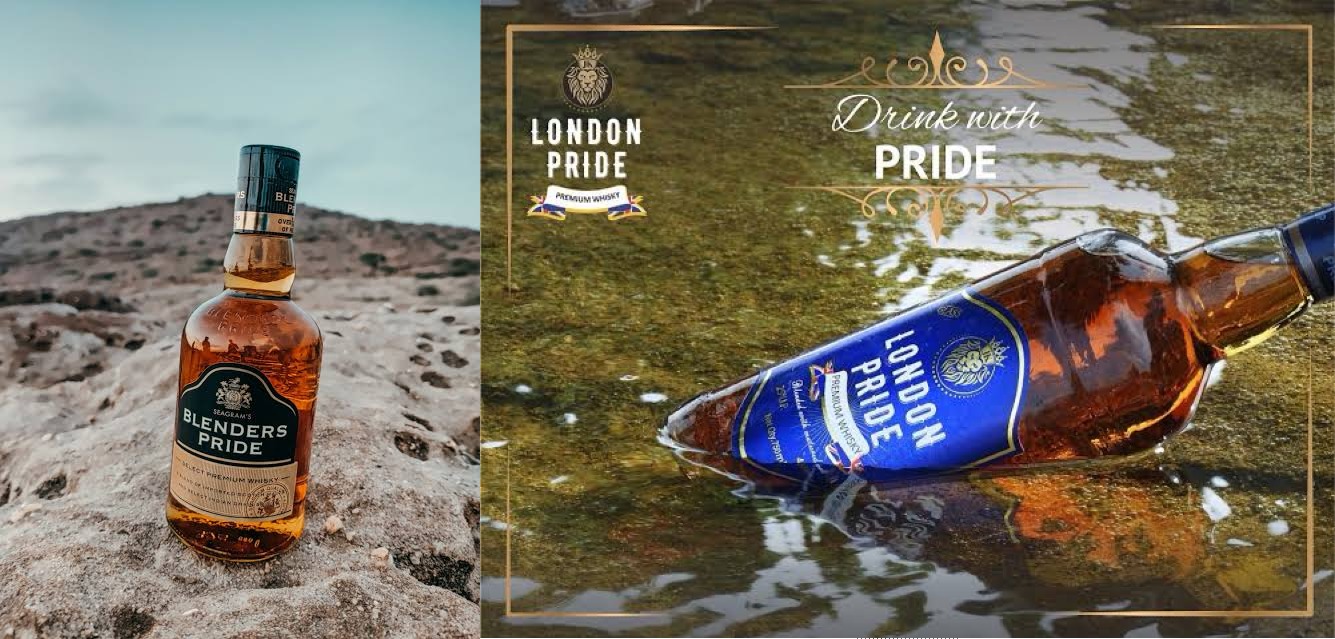
The term ‘PRIDE’ being a common and laudatory expression, cannot be claimed exclusively in isolation. Commercial Court and High Court have rightly held, the term ‘PRIDE’ is publici juris, and commonly used in Liquor Industry. Though products are similar, branding-packaging-trade dress of each are materially distinct. Viewed holistically, the competing marks do not create such an overall resemblance as is likely to cause confusion or deception in the mind of an average consumer exercising imperfect recollection.
The recent decision of Supreme Court of United Kingdom in Iconix Luxembourg Holdings SARL v. Dream Pairs Europe Inc, [2025] UKSC 25 marks a significant development, particularly concerning Principle of Post-Sale Confusion. Doctrine of Post-Sale Confusion, while significant, is not directly applicable to facts of this particular matter. The issue remains ripe for a more comprehensive analysis in a future case.
– Hon’ble Justice R. Mahadevan, Pernod Ricard India Private Limited v. Karanveer Singh Chhabra, [Civil Appeal No. 10638 of 2025] decided on 14.08.2025.

 The Last Word
You must be logged in to post a comment.