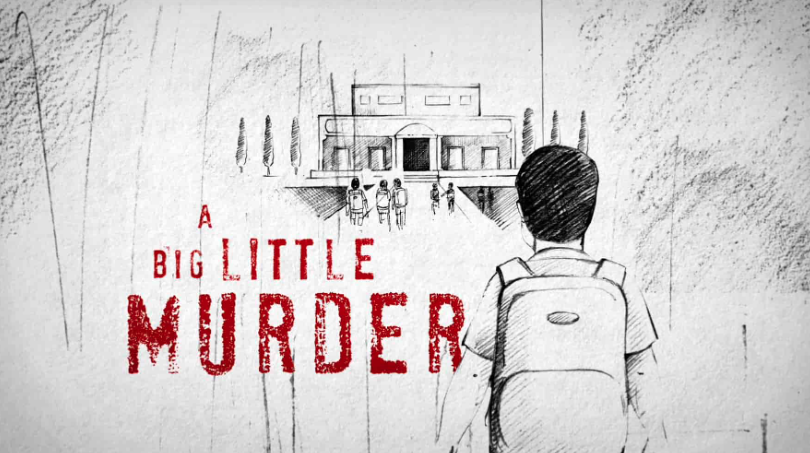
An unfortunate incident took place on 08.09.2017 in an institution in Gurugram.
Bholu’s D.o.B. – 03/04/2001.
_____
The ‘preliminary assessment’ made by Juvenile Justice Board under Section 15 of The Juvenile Justice (Care and Protection of Children) Act, 2015 is under consideration. A ’preliminary assessment’ decides on transferring the case of a ‘child’ between 16 to 18 years of age to Children’s Court. Life Imprisonment can be awarded, if Children’s Court tries the ‘child’ as an ‘adult’.
Board and Children’s Court apparently were of view, if Bholu had the mental capacity to commit an offence, then Bholu automatically had the capacity to understand the ‘consequences’. This, in our consideration, is a grave error; ‘consequences’, as used in Section 15, would not just be confined to ‘immediate consequences’.
A ‘preliminary assessment’ is largely dependent upon Board’s wisdom, in absence of any framework of guidelines. It is a delicate task. It appears expedient, appropriate and specific guidelines in this regard are put in place.
_____
We have no hesitation in agreeing with High Court in remanding Bholu’s matter for a fresh consideration after rectifying errors on lack of adequate opportunity.
– Hon’ble Justice Vikram Nath, CBI v. Bholu, [Criminal Appeal No. 951 of 2022].
The Juvenile Justice (Care and Protection of Children) Act, 2015 – Section 15 – Preliminary assessment into heinous offences by Board– Board may take assistance of experienced psychologists or psycho-social workers or other experts.
The requirement of such assistance was held to be mandatory in Barun Chandra Thakur v. Master Bholu, (2022) 10 SCR 595.
– Hon’ble Justice Rajesh Bindal, Child in Conflict with Law v. State of Karnataka, [Special Leave Petition (Criminal) No. 3033 of 2024] decided on 07.05.2024.
_____
There is no doubt in our mind, passing of an order under Section 19(1) of The Juvenile Justice (Care And Protection Of Children) Act, 2015 is mandatory in nature and without passing an order under Section 19(1), Children’s Court cannot proceed further. The Juvenile Justice (Care and Protection of Children) Model Rules, 2016 makes it abundantly clear, Section 19(1) is mandatory in nature. Before parting, we deem it appropriate to issue a word of caution to Children’s Courts.
– Hon’ble Justice Aravind Kumar, Sagar v. State of Haryana, [Special Leave Petition (Criminal) No. 8113 of 2024] decided on 13.07.2026.
_____
We must acknowledge, children today are exposed at an early age to complex information, graphic content and adult experience that were inaccessible to previous generations. There is no doubt, proliferation of technology and pervasive influence of social media has altered cognitive and psychological development of children.
– Hon’ble Justice J.B. Pardiwala, X v. State of Bihar, [Criminal Appeal No. 3299 of 2026] decided on 21.07.2026.
Majority View in Schall v. Martin, (1984) SCC OnLine US SC 126 authored by Justice Rehnquist held, State has a parens patriae interest in the welfare of a child.
State owes a responsibility to reintegrate juveniles in society, rather than permanently stigmatizing them. It is well remembered, children are the greatest assets of any nation and they should be nurtured and grown as responsible citizens, mentally alert, physically fit and morally healthy to contribute to betterment of society.
– Hon’ble Justice Shree Chandrashekhar, Mahavir v. State of Madhya Pradesh, [Special Leave Petition (Criminal) No. 5654 of 2026] decided on 02.09.2026.


You must be logged in to post a comment.